
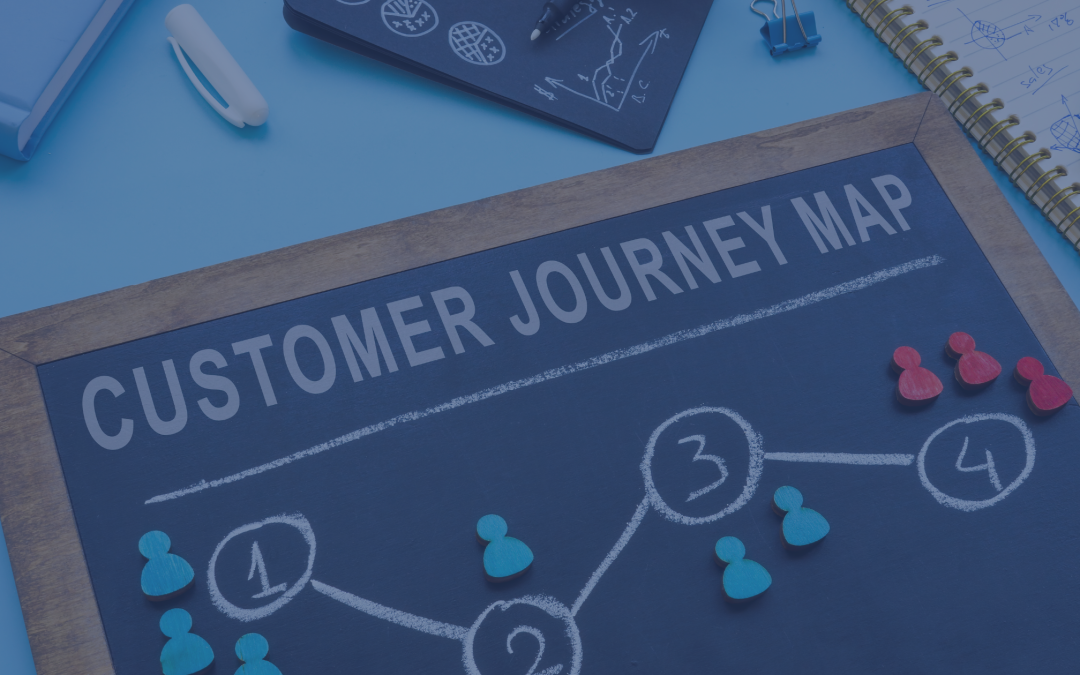
But in 2026, this model is breaking down. Buyer behaviour is no longer linear. With the way of the world, the uncertainty and instability, buyers need more reassurance, time to decide and confidence.
AI search, generative assistants, and algorithmic recommendations have fundamentally changed how people discover, evaluate and choose products. The funnel has more than evolved, it’s been replaced entirely by something that’s not always better. While it’s much more dynamic, it’s increasingly fragmented.
The Traditional Marketing Funnel No More
The classic funnel assumes three things. Firstly, buyers start at awareness. Secondly, they move step by step towards purchase, and thirdly marketers can guide them through controlled touchpoints. But this assumption no longer holds.
Today’s buyers can quickly jump from problem to solution in seconds. They can compare multiple options simultaneously through AI tools, re-enter research loops after initial decisions and rely on AI summaries instead of sequential content browsing. The journey is no longer a funnel, it’s a fluid, multi entry decision network.
The AI Powered Buyer Journey
Instead of a funnel, think of modern buying behaviour as a looping, AI assisted decision system. AI now acts as a discovery engine, research analyst, comparison tool, decision filter and post purchase advisor. This compresses what used to take days or weeks into minutes. The journey has moved from:
Awareness – Interest – Consideration – Decision
Towards
Question – AI Answer – Validation Loop – Micro Decision – Re-Query – Purchase (or delay)
Let’s see how this looks in practice.
Stage 1 Intent Emerges (Not Awareness)
In the old marketing funnel, awareness came first. We all know that. But, in the AI model, intent is triggered instantly. A user doesn’t ‘discover’ a brand anymore. They are asking questions.
‘Best CRM for small teams under £50 a month’
‘Is X or Y better for freelancers?’
‘What should I use instead of (tool)?’
This means the buyer already has context, they are not exploring broadly and they expect immediate, synthesised answers. Awareness has been replaced by query based intent formation.
Stage 2 AI The First Research Layer
Instead of visiting multiple websites to perform research, users now rely primarily on AI generated summaries that aggregate multiple sources, remove redundancy, normalise comparisons and rank options implicitly. And this changes everything. Traditional top of the funnel content such as blogs, guides and listicles is no longer the first touchpoint. Instead it becomes:
Input data for AI systems that generate the first meaningful answer.
If your content is not structured for AI interpretation, it may never appear in the buyers initial consideration set.
Stage 3 The Collapse of Consideration
In the funnel model, consideration was a long phase of reading blogs, comparing options, watching demos and browsing reviews. Now, AI compresses all of this into a single, conversational interface. A buyer might ask:
Compare Notion vs ClickUp vs Asana for a marketing team
With this, they receive a feature comparison, pricing summary, strengths and weaknesses and recommended use cases. All in one response. This creates a major shift. Consideration isn’t a phase on its own anymore, it’s a single AI interaction. That said, it doesn’t eliminate it completely.
Stage 4 Decision Making Becomes Non Linear
Even after AI provides recommendations, buyers rarely convert immediately. Instead, they re-check assumptions with follow up queries, ask for alternatives, look for hidden downsides, validate pricing or integration details and cross check across multiple AI tools. This creates a loop of micro decisions, rather than a final conversion point.
A buyer might:
- Ask AI for the best tools
- Narrow to two options
- Ask for limitations
- Search for user experiences
- Return to AI for clarification
- Decide, or postpone again
There’s no single decision stage anymore.
Stage 5 Post Purchase AI Influence
Even after purchase, the journey continues. AI now assists with setup guidance, troubleshooting, feature discovery, optimisation advice, renewal or upgrade decisions, which means the funnel doesn’t end at conversion, it extends indefinitely. Brands are now evaluated continuously.
Marketing Implications
If the funnel is gone, what replaces it? Not a new linear model, but a set of principles that navigate AI driven behaviour.
Visibility in AI responses matters more than rankings – If your brand is not included in AI generated answers, you are effectively invisible at the moment of decision. This shifts focus from ranking pages to being referenced, summarised or included in AI outputs.
Content must be machine readable and modular – AI systems prefer content that has structure, clarity, fact rich and easy to segment and reuse. Long narrative content still has its place, but it must be extractable into discrete knowledge units.
Comparison content becomes key infrastructure – AI systems frequently generate comparisons. If your product isn’t part of structured comparison data, it may never appear in those outputs. Effective formats include feature matrices, use case breakdowns, pricing tables and pros and cons summaries.
Trust signals are amplified – AI systems tend to reinforce perceived authority. Strong brands get stronger visibility, weak signals get filtered out earlier and consistency across sources matters more than ever before.
The Service Based Funnel
For service businesses, the things they sell include expertise, trust, risk reduction and outcomes that are hard to evaluate upfront. That makes them far more sensitive to AI mediated decision making. Instead of linear progression, buyers now jump in and out of stages depending on urgency, confidence and AI output.
The classic funnel was:
Awareness – Someone discovers your service
Interest – They explore your website or content
Consideration – They compare providers
Conversion – They book a call or sign a contract
Retention – Ongoing relationship
This model still exists on paper, but the path through it has changed dramatically.
Awareness is now AI filtered discovery
In traditional funnels, awareness came from Google search, referrals, social media and ads. Now, the most initial discovery looks like this:
‘Who are the best marketing agencies for SaaS startups’
‘Do I need a fractional CFO or an accountant’
‘Top UK immigration solicitors for skilled worker visas’
Buyers no longer discover you which is the biggest change. They discover categories and shortlists generated by AI. If your service isn’t represented in those AI summaries, you often never enter consideration at all.
Consideration has collapsed into instant comparison. For service businesses, comparison used to be slow and manual. Reading case studies, checking reviews, emailing providers, booking calls, but now AI compresses that into seconds. A buyer can ask, ‘Compare 3 HR consultancies for SMEs in the UK with pricing and pros/cons’ and immediately received a synthesised shortlist.
This means your positioning is pre-interpreted before a human ever visits your site, your differentiation must be machine readable, not just persuasive on landing pages, and you are competing inside an AI generated comparison set, whereas before you were hoping to be found in a search results page.
Conversion is no longer the end point. In service businesses, conversion used to mean booking a call, signing a contract, or starting a project, but now conversion is often preceded by multiple AI loops. A typical modern journey might look like:
- Ask AI for recommendations
- Shortlist 2-3 providers
- Ask AI which is better for my situation
- Check pricing expectations
- Ask what questions should I ask on a call
- Then book a call
So by the time a prospect reaches you, they are more informed, more sceptical, more comparison heavy and less influenced by surface level marketing.
Trust becomes the real funnel driver.
For service businesses, the biggest shift is the funnel is no longer focused around persuasion, but trust validation. AI amplifies trust signals like consistency across the web such as reviews, mentions and sites, depth of expertise shown in content, clear specialisation rather than vague, we do everything messaging, and third party validation through case studies, citations and reviews. If AI systems can’t confidently place you in a category, you often don’t get recommended at all.
Post conversion influence is now part of the funnel too.
Service businesses have always had a retention stage, but AI extends it. Now, clients may ask AI how to evaluate your work, use AI to check if they’re getting value, compare your output continuously against alternatives and seek AI advice before renewing contracts. The funnel doesn’t end at conversion, it becomes the ongoing performance verification loop.
The old funnel which was linear would take the form of awareness – interest – consideration – conversion – retention.
The new model is
Trigger question – AI shortlist – comparison loop – trust validation – assisted conversion – continuous evaluation
If there’s one change that matters most, remember you are no longer competing for attention. You are competing for inclusion in AI generated shortlists. This changes how service businesses grow in three ways.
Positioning Becomes More Important Than Persuasion
Authority becomes structural so you become consistently understood across the web.
Content becomes training data for trust through case studies, comparisons and expertise that shape how AI describes you.
For service based businesses the traditional funnel has been absorbed into AI systems that now act as the researcher, comparator, recommender and increasingly the validator.
The real challenge for all service businesses going forward is making sure AI systems consistently understand, trust and recommend you at the exact moment a buyer asks a question.
Frequently Asked Questions
Is the marketing funnel really dead?
Not entirely. The funnel still serves as a useful framework for understanding how people move from initial interest to purchase. However, it no longer accurately reflects how most buyers behave in an AI driven world. Today’s journeys are often non-linear, with buyers moving back and forth between discovery, evaluation and decision making rather than progressing through a fixed sequence.
What has replaced the traditional marketing funnel?
Rather than being replaced by a single new model, the funnel has evolved into a more dynamic buyer journey. AI powered search, recommendation systems and conversational assistants allow us to enter the journey at different stages, revisit previous decisions and gather information from multiple sources simultaneously.
How has AI changed the buyer journey?
AI has become an active participant in the buying process. Instead of manually researching products and services across dozens of websites, buyers can ask AI tools to summarise options, compare providers, explain features and recommend solutions. This compresses research and consideration into a much shorter timeframe.
Are buyers making decisions faster because of AI?
In many cases, AI can significantly reduce the time required to research and compare options. However, while the research phase may be shorter, buyers often conduct multiple validation checks through different AI tools and sources before making a final decision.
What should marketers focus on in 2026?
Marketers should focus on building authority, creating content that is both human and AI friendly, strengthening brand trust signals, and ensuring their expertise is visible wherever AI systems gather information. Success will increasingly depend on becoming included in AI generated recommendations, not just ranking in search results.
WORK WITH US
Build a memorable journey that people experience. Create content that attracts the right people, messaging that builds trust quickly, and offers that feel like a natural next step rather than a hard sell. When it works, your marketing stops feeling like constant effort and starts working like infrastructure. We help brands build marketing funnels that convert, a cohesive system that moves people from first touchpoint to loyal customer.
About The Author

Lotan Carter, Director
Lotan Carter is a social media and brand strategy professional with agency side experience covering social media management, brand building and creative communications.
He has worked across high profile consumer and lifestyle brands, helping to shape and scale their digital presence through strategic content, audience engagement and cohesive brand storytelling.
Known for blending creative direction with commercially driven thinking, Lotan has played an influential role in developing social first brand identities and managing campaigns designed to grow visibility, market relevance and long term brand equity.